

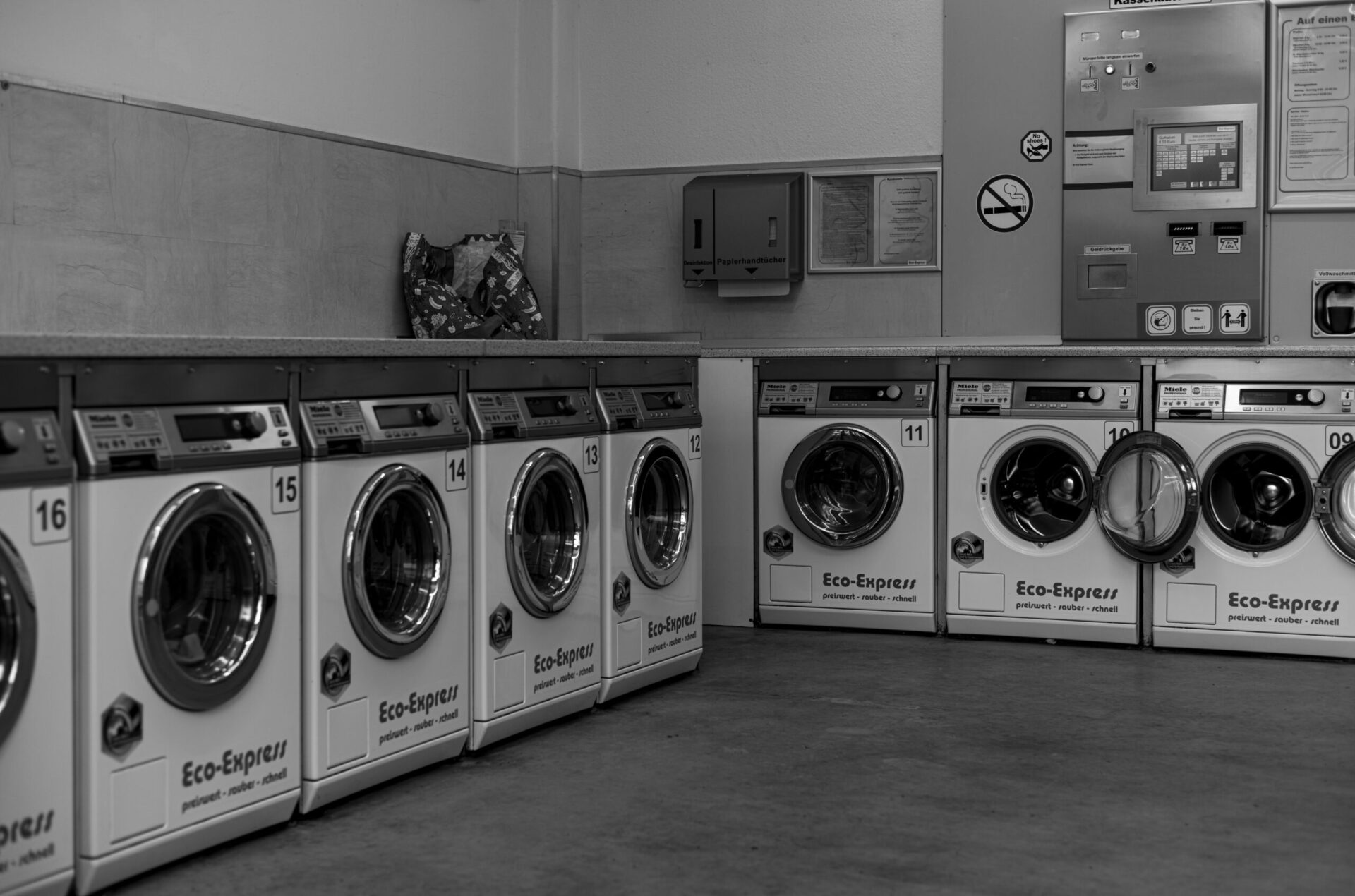
Whether you’re living in or visiting Macau, there are bound to be a few occasions when ‘doing the laundry’ becomes a real headache. Every spring, the ‘return of the south wind’ makes the whole city extremely humid; clothes left hanging on the balcony for three days and three nights not only fail to dry but also give off a foul, musty odour; For travellers visiting Macau on business or holiday, luggage space is limited, and the high laundry charges at hotels often prove a deterrent; whilst for international students on the outlying islands who have just moved out of halls of residence, or busy dual-income families, finding a reliable launderette that won’t damage their clothes is an essential part of daily life.
Hidden away in the streets and alleys of Macau are many traditional neighbourhood laundrettes, professional dry-cleaning chains, and the growing number of 24-hour self-service laundrettes that have sprung up in recent years. Faced with such a wide array of choices, how on earth should you choose? This article will cut through the complex theory and take a hands-on approach, guiding you step-by-step on how to narrow down your options based on three practical criteria: ‘urgency’, ‘type of laundry’ and ‘completeness of business information’. It also includes a checklist of essential questions to ask before calling a shop, as well as answers to frequently asked questions.
I. Prioritising by Urgency: A Laundry Strategy for When You’re Racing Against the Clock
Life is always full of unexpected situations: you have an important client meeting tomorrow morning, but you’ve accidentally spilled coffee on your suit jacket; or you’re on holiday in Macau and have been caught in days of torrential rain, and with check-out and a trip to the airport tomorrow, all your clothes are soaked. When time is of the essence, walking blindly into just any dry cleaner’s on the corner is highly likely to disrupt your plans.
1. Need to wear it today or tomorrow: opt for ‘same-day delivery’ and express services
Standard laundry or dry-cleaning services usually take two to three working days to complete. If you are in a particularly tight spot, when searching online or checking shop signs, you must prioritise checking whether the business clearly states that it offers ‘same-day service’, ‘express service’ or ‘priority processing’.
- Same-day delivery rules: Many large-scale laundrettes in Macau offer this service. The unwritten rule is usually that you must drop off your laundry at the shop by a specific time in the morning (for example, before 10:00 or 12:00 noon) in order for the shop to have it ready for collection that same evening or before closing time.
- Express delivery charges: There’s no such thing as a free lunch; an express service usually incurs an additional charge of between 50% and 100% on top of the standard cleaning fee. Before sending your garment for cleaning, be sure to consider whether it is worth the extra cost.
2. Late finishers and night owls: Look for places with longer opening hours or 24-hour service
By the time many office workers have finished their overtime, or visitors to the casino have finished exploring and had a late-night snack, it is often already past 20:00. By this time, the vast majority of traditional neighbourhood laundrettes have already shut their shutters.
- To avoid making a wasted trip, please give priority to chain stores that are open until 21:00 or even later.
- If you simply need to wash ordinary clothes or just dry them, the 24-hour self-service laundrettes in each district are definitely the best option; you’re in control of your own time and aren’t restricted by shop closing times at all.
3. For those who prefer not to go out and for bulky items: look for retailers that explicitly state they offer a ‘collection and delivery’ service
If you live on a high floor of a block of flats, need to have heavy winter duvets or curtains washed, or simply can’t find the time to go out, look for a laundry service that offers a ‘door-to-door collection and delivery’ service.
- As the streets in Macau are narrow and parking is difficult, laundries that offer a collection and delivery service are usually of a certain size.
- When making your choice, please check whether the shop has clearly indicated on its leaflets or social media platforms a ‘minimum spend threshold’ (for example, a minimum spend of MOP 100 or a minimum weight requirement to avoid a charge), and whether an additional call-out fee applies to remote areas (such as Coloane town centre or the vicinity of Hắc Sà Beach).
4. Special Notes for Hotel Guests
If you are staying at a hotel on Cotai’s Golden Strip (such as The Venetian, The Londoner or Galaxy) or at a star-rated hotel on the Macau Peninsula, this is very important. Whilst in-room laundry services are convenient, they are usually charged per item and can be extremely expensive. When choosing an external laundry service to collect your laundry from your hotel, there are two golden rules:
- Confirm the delivery location: For security and guest privacy reasons, high-end hotels in Macau strictly prohibit external food delivery drivers or laundry service staff from accessing guest room floors. You must make this clear to the shop in advance, and both parties should arrange to meet in person in the ‘hotel lobby’, at the ‘concierge desk’ or at a designated ‘taxi rank’ to complete the handover.
- Allow for traffic delays: Traffic congestion is very common in Macau during the morning and evening rush hours, particularly on the Friendship Bridge and Sai Van Bridge linking the Macau Peninsula and Taipa. Be sure to coordinate the time with your driver and allow at least a two-hour buffer before setting off for the airport or ferry terminal, to avoid missing your flight because you haven’t collected your clothes.
II. Sorting by garment type: striking a balance between value for money and professional results
Different items of clothing have vastly different ‘fates’. Throwing a pure-cotton T-shirt costing a few hundred yuan into the same washing machine as a bespoke suit costing tens of thousands of yuan would undoubtedly be a disaster. You need to identify the materials your clothes are made of in order to find the right service.
1. Everyday casual wear: Choosing between standard laundry, coin-operated laundrettes and self-service laundrettes
When it comes to pyjamas, jeans, plain T-shirts, sportswear or bed linen—items that can withstand a bit of rough handling and simply need to be cleaned to remove stains and sweat odours—value for money is the key consideration. You can use the table below to quickly compare three common options:
| Wash cycles | Pricing and How It Works | Key Strengths | Potential drawbacks | Most suitable scenarios |
| Pound wash (charged by weight) | There is a minimum weight requirement; charges are based on the total weight of the batch of laundry. | The prices are extremely reasonable, making it ideal for large loads of laundry; the shop will dry and fold your laundry for you. | Ironing is not included; garments may be slightly creased and are washed together with other items | A week’s worth of dirty laundry from international students, the family’s daily wash, and washing bed linen and duvets |
| Self-service laundry (24 hours) | Pay on-site by coin or electronic payment; washing and drying are charged separately per cycle | The fastest speed, excellent high-temperature drying and sterilisation, and complete flexibility in scheduling | You must be present to operate the machine and wait; once the wash cycle is complete, you must fold the laundry yourself. | For those who need to dry their belongings urgently following heavy, continuous rain, or who do not like others touching their personal belongings |
| Standard Laundry (charged per item) | Charged per item, with prices based on the thickness and size of the garments | Includes specialist cleaning and high-temperature ironing; your garments will be as smooth as new when you collect them | The unit price is quite high, so the cost can be staggering when you accumulate several items; processing takes around two to three days. | Office workers who need to dress smartly, and those who do not have access to dry cleaning but require their shirts to be pressed |
2. High-end and special-fabric garments: suits, formal wear, and garments made of wool and silk
When you are dealing with an expensive suit jacket, a pure silk dress, a woollen coat or an evening gown featuring intricate sequinned embroidery,Under no circumstances should you opt for pay-by-weight washing just to save a few pennies, and certainly don’t put your laundry into a self-service washing machine yourself.
- First, enquire about dry-cleaning facilities: Before sending this type of garment for cleaning, the first step is to check whether the establishment has ‘professional dry cleaning’ equipment. Dry cleaning uses special organic solvents that effectively prevent wool from shrinking and silk from fading.
- Observe the shop’s attitude towards receiving parcels: At a reputable, professional dry cleaner’s, the staff will, upon receiving your high-end garments, proactively check the ‘care label’ on the inside of the garment and carefully inspect it for any pre-existing damage, loose threads, missing buttons or stubborn stains, before noting these on the receipt. If the staff member simply stuffs the garment into a bag without even glancing at it, we recommend you find another establishment.
3. Shoe, bag and leather goods care: It is essential to seek out professional services that are clearly priced
The cleaning and care of trainers, leather shoes, leather jackets and even designer handbags—which can easily cost tens of thousands of yuan—is a highly specialised field. This involves leather colour restoration, the repair of special coatings and hand-brushing.
- Choose only merchants listed publicly: When choosing a shop, look only for those that ‘clearly state’ on their shop signs, official websites or promotional materials that they offer a cleaning service for shoes, bags and leather goods.
- Say no to unprofessional part-time work: Under no circumstances should you hand your designer handbag over to a local shop specialising in dry cleaning, even if the owner enthusiastically offers to ‘give it a quick brush by hand’. Cleaning carried out without specialist knowledge of leather chemistry is highly likely to cause the leather to harden, irreversible colour fading, or rust and oxidation of the metal fittings.
III. Filtering by data completeness: ‘Digital detective techniques’ for identifying reliable retailers
In this day and age, when anyone with a mobile phone can post advertisements on social media, many consumers are easily drawn in by eye-catching promotional images online. However, as laundry services involve the safekeeping of your personal belongings, the ‘transparency’ and ‘completeness’ of a provider’s information directly reflect the legitimacy of their operations and their ability to manage risks.
Give priority to merchants with a ‘four-in-one’ profile containing all the necessary information
When choosing a laundry service in Macau, you should prioritise establishments that are listed on public platforms (such as the Macau Yellow Pages, the list published by the Government’s Consumer Council, or the businesses’ own official websites and verified WeChat official accounts) and that clearly state the following four pieces of information:
- A specific physical address: You must include the specific street name and house number (e.g. Ground Floor, No. XXX, Rua Nova de Areia Preta, Macau; No. XXX, Rua de Chengdu, Taipa).
- Valid contact telephone number: It is best to have both a landline number and a mobile phone number or messaging app contact details.
- Exact opening hours: This includes the weekly day off, public holiday arrangements, and whether there is a staff break at lunchtime.
- Background on reliable sources: They hold a valid business registration or have been awarded the ‘Trustworthy Shop’ logo by the Macao Consumer Council.
The Potential Risks of Incomplete Information and How to Address Them
If you come across an advert for a laundry service on an online forum or in a group chat, but find that they have only provided a WeChat ID or a mobile number and no physical address can be found anywhere, it is highly likely to be an unregulated ‘home-based business’.
When consumers entrust their clothes to such businesses, they often find themselves in the predicament of having nowhere to turn if their clothes are damaged during washing, designer items are swapped for imitations, or the business simply disappears after collecting the clothes and a deposit.
Guidelines for dealing with the situation: If the source only provides partial information, be sure to call to verify the exact location of the shop and its operating licence before visiting in person or handing over your items to a driver collecting them from your door; under no circumstances should you proceed with the transaction blindly.
IV. Questions to ask before making a call: A ‘checklist’ to help you avoid pitfalls
Once you have shortlisted a few potential dry cleaners based on the criteria above, making a two- or three-minute confirmation call before handing over your items for cleaning can help you avoid the vast majority of subsequent consumer disputes. Below, we have summarised the four key questions you must ask when you call:
- Regarding pricing methods and hidden charges:‘If I were to have these few items of clothing washed by weight, what would be the minimum charge? If I need them back by tomorrow evening as a rush order, how is the rush charge calculated? Is it an extra charge per item, or is the total price doubled?’
- Regarding standards for stain removal and compensation for damage:‘I’ve spilled red wine on a white silk shirt. Do you offer a specialised stain-removal service? Also, if a garment shrinks or becomes severely discoloured due to improper washing, what are your company’s compensation guidelines?’(Note: The standard compensation limit at reputable shops is usually several times the cost of washing the garment; in the case of extremely valuable garments, be sure to ask whether you can declare their value in advance.)
- Specific details regarding hotel check-in (for guests):‘I am a guest staying at [Name of Hotel]. When your driver comes to collect my laundry, where should I meet them—at the main entrance of the hotel lobby, at the concierge desk, or at the taxi rank outside? Is the drop-off point the same? How long before the driver arrives will I be notified by phone so that I can come downstairs?’
- Regarding collection deadlines and late collection fees:‘Once the clothes have been washed, how many days do I have at the latest to collect them? If I happen to be away on a business trip and can’t collect them for a week or two, will I be charged an additional storage fee?’(Note: As shop rents in Macau are high and space is at a premium, many shopkeepers strictly limit the period during which items can be stored free of charge; after this period, a daily fee will be charged.)
V. Frequently Asked Questions (FAQ) on Laundry Services in Macau
Q1: In Macau, what is the practical difference between ‘pound wash’ and ‘standard laundry’?
The main difference lies inLevel of detail in individual processingandDoes this include ironing?.
A ‘per-pound’ wash involves weighing your laundry as a single batch and charging by weight. The shop will usually place your large bag of clothes directly into the washing machine and tumble dryer; once the cycle is complete, a member of staff will fold the items and pack them into a bag. This service does not include ironing, and your clothes may be processed in the same batch as other customers’ items (depending on the scale of the shop’s facilities). Standard laundry services, on the other hand, are charged per item. Each garment is assessed for wet or dry cleaning based on its fabric, and is always professionally ironed at high temperatures before being hung on a hanger, placed in a transparent dust-proof bag and returned to you.
Q2: When Macau experiences severe ‘humid weather’, are there any special tips for drying clothes at a self-service launderette?
In spring, humidity levels in Macau often soar above 95%, making it very easy for mould to grow on clothes. When using the large tumble dryers at 24-hour self-service laundrettes, the most important thing is toNever overfill the tumble dryer.
The volume of laundry must not exceed two-thirds of the tumble dryer drum; sufficient space must be left to allow hot air to circulate through the fibres of the garments. In addition, please check the care labels carefully before loading the tumble dryer and remove any synthetic fibres, woollens or garments with heat-sensitive printed designs that cannot withstand high temperatures. It is recommended that you pause the cycle every 20 minutes to open the door and check how dry the laundry is, to avoid over-drying which can cause significant shrinkage.
Q3: If I take a pair of limited-edition trainers or a designer handbag to a dry cleaner’s and they are damaged in the process, is there any legal protection in Macau?
Macao’s Consumer Rights Protection Law safeguards consumers’ legitimate rights and interests. However, in practice, to avoid difficulties in providing evidence, the most effective way to protect oneself before sending valuable items for dry cleaning is toVoluntarily report and retain evidence.
We recommend that you only choose retailers displaying the ‘Trustworthy Shop’ logo certified by the Government’s Consumer Council. When handing over your items for cleaning, be sure to take photographs and videos of the current condition of your bag or shoes (from all angles, including existing wear and tear and scratches on metal fittings) in the presence of a member of staff, and ask the shop to clearly state the brand, model and condition of the items at the time of handover on the receipt. If the shop refuses to commit to compensation or adopts an evasive attitude, we strongly recommend terminating the transaction and seeking another organisation specialising in the repair and care of luxury goods.
Q4: As a guest staying at a star-rated hotel, if I arrange for an external laundry service to collect and deliver my clothes, will I be stopped by the hotel security?
As long as you comply with the hotel’s visitor policy, there will be absolutely no problem. Hotel security and the concierge will not restrict guests from handing over or collecting personal items in public areas. The key is that you must go downstairs in person to meet the laundry delivery driver in the lobby, outside the main entrance or at the designated drop-off point. Under no circumstances should you allow external visitors to attempt to follow other guests into the lift and travel to the guest floors, as this will trigger the security system and cause unnecessary trouble.
Q5: How exactly should you interpret the ‘dry clean’ label on clothes? Can all heavy coats be dry-cleaned?
Not all thick coats are suitable for dry cleaning; a common misconception is to take down jackets to the dry cleaner’s. In fact, the chemical solvents used in dry cleaning can strip away the natural oils from the surface of the down, causing it to become brittle and lose its loft and warmth; down jackets are generally better suited to a gentle wash.
To find out whether a garment can be dry-cleaned, simply check the care label on the inside of the garment:
- If the label features a ‘circle (◯)’ symbol, this indicates that the garment is suitable for professional dry cleaning.
- If a ‘big cross (✕)’ is shown inside a circle, this means the garment must not be dry-cleaned under any circumstances; attempting to dry-clean it may cause the fabric to disintegrate or become severely misshapen. If you are unsure, the best course of action is to take a photo of the label and send it to the dry cleaner’s customer service team when you call, so they can help you determine the correct care instructions.